
Collection/Lacquer
Lacquer
Depth, patience, surface
Objects where time accumulates in layers: ottchil and its related lineages, worked with contemporary restraint.
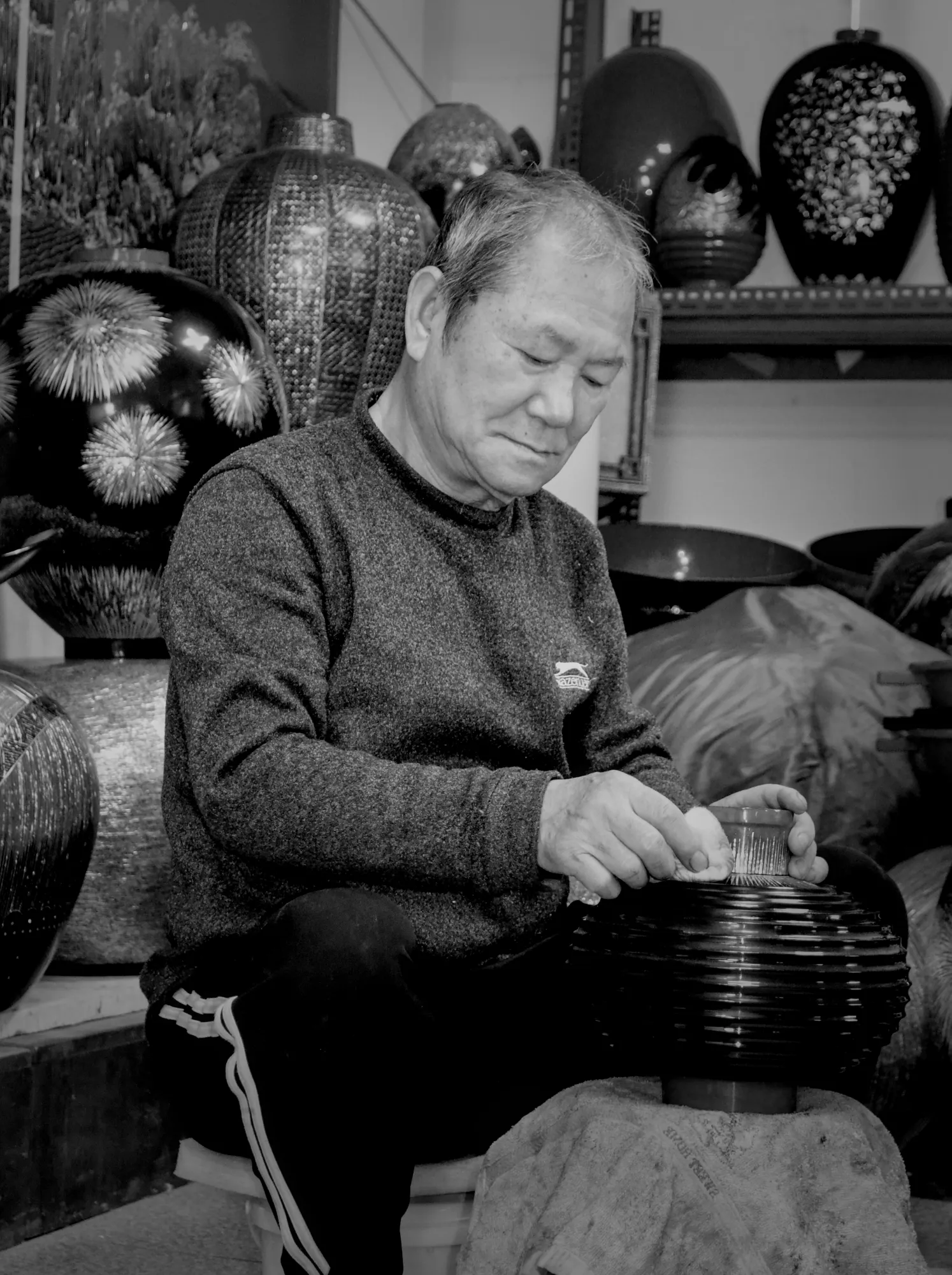
Seongho Kim
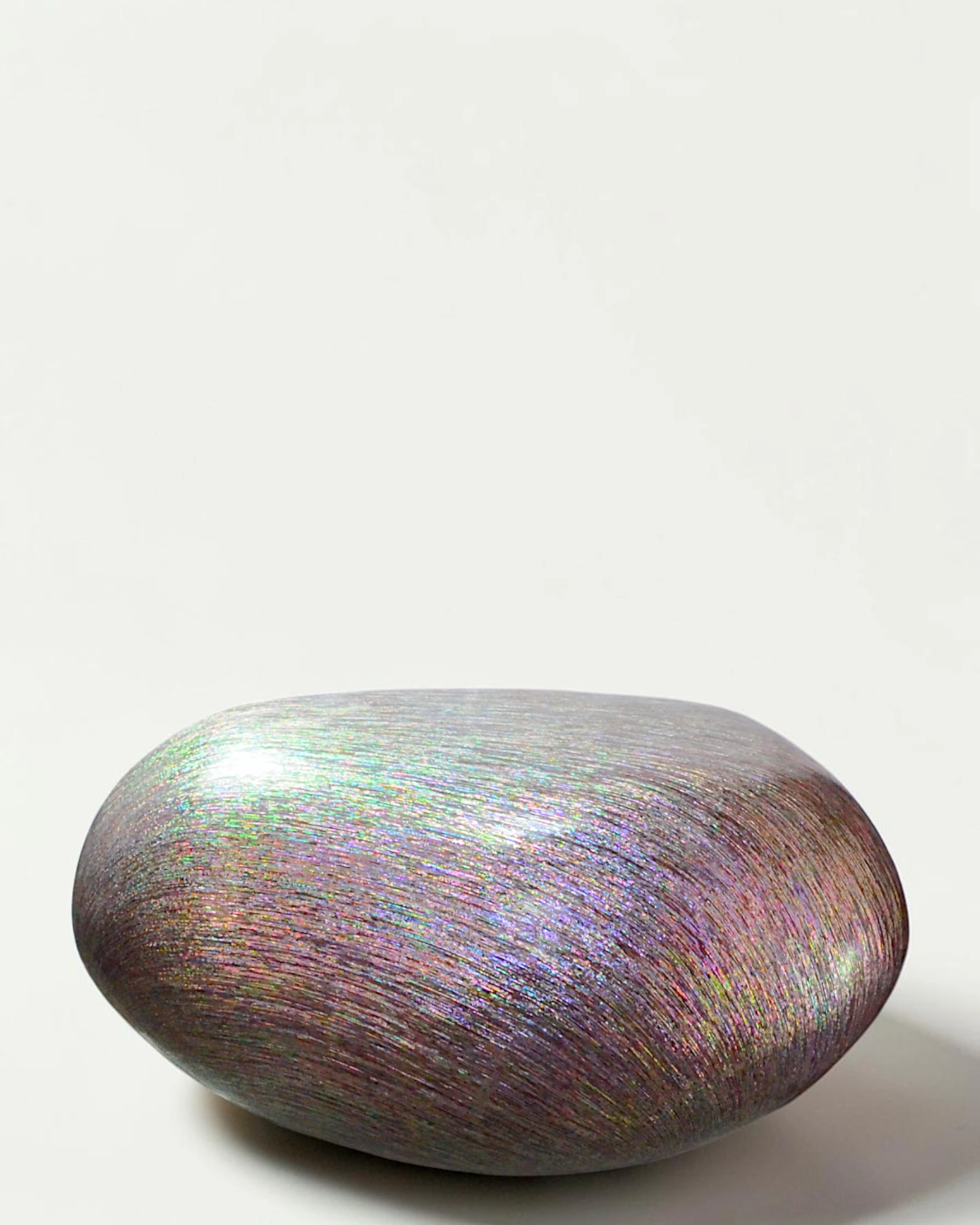
No. 1
A closed, stone-like form built entirely from combed ottchil layers, no vessel opening, no interior to speak of. Light moves across the surface in one continuous direction, reading silver, violet, and pale green depending on the angle of view. The palest and coolest of Kim's three forms in this collection.
View work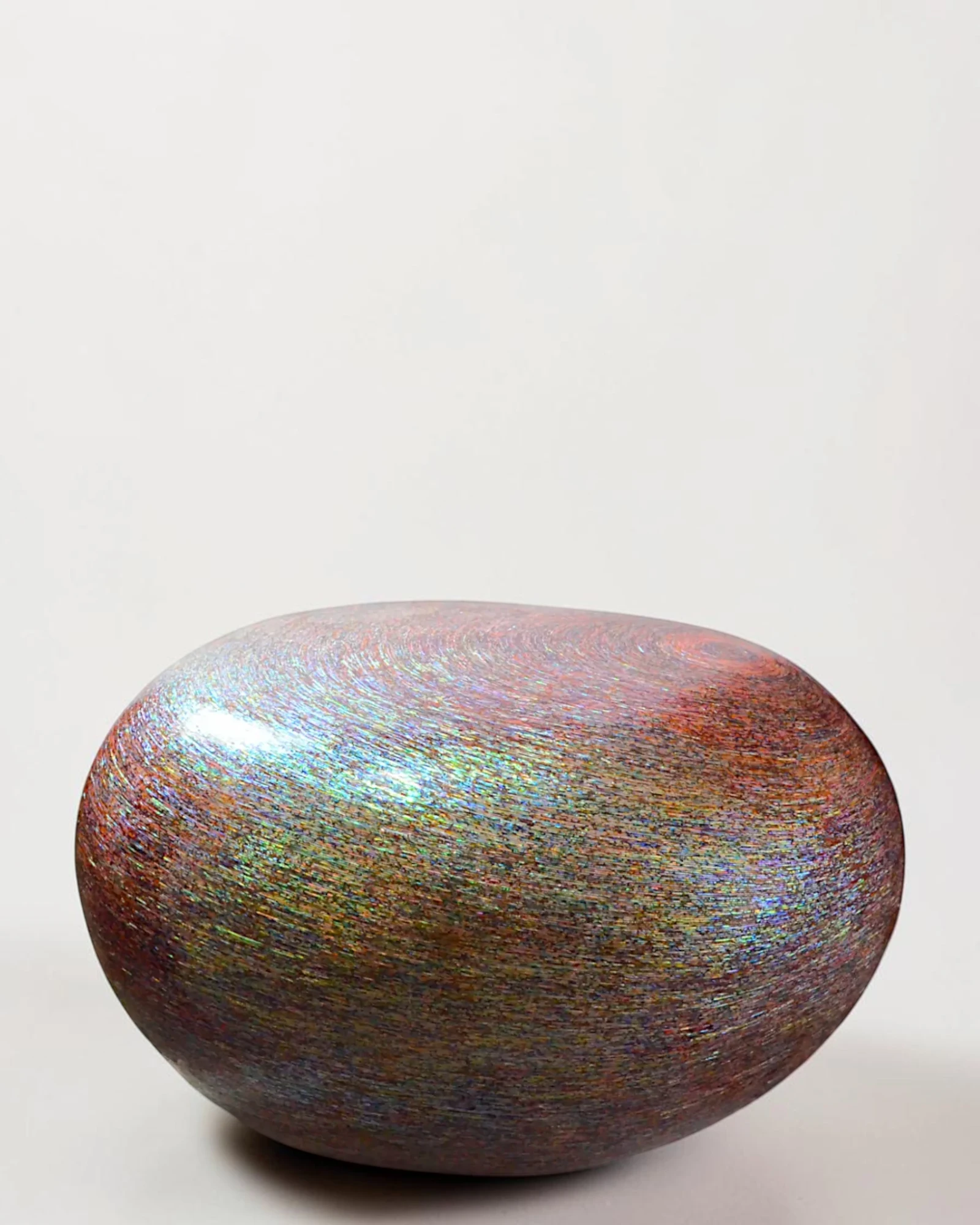
Seongho Kim
No. 3
The same closed-form method as No. 1, worked toward a warmer register: copper and rose tones dominate, with a visible spiral concentration at the crown where the combed strokes converge. Denser in color than No. 1, with no change in structure or intent.
View work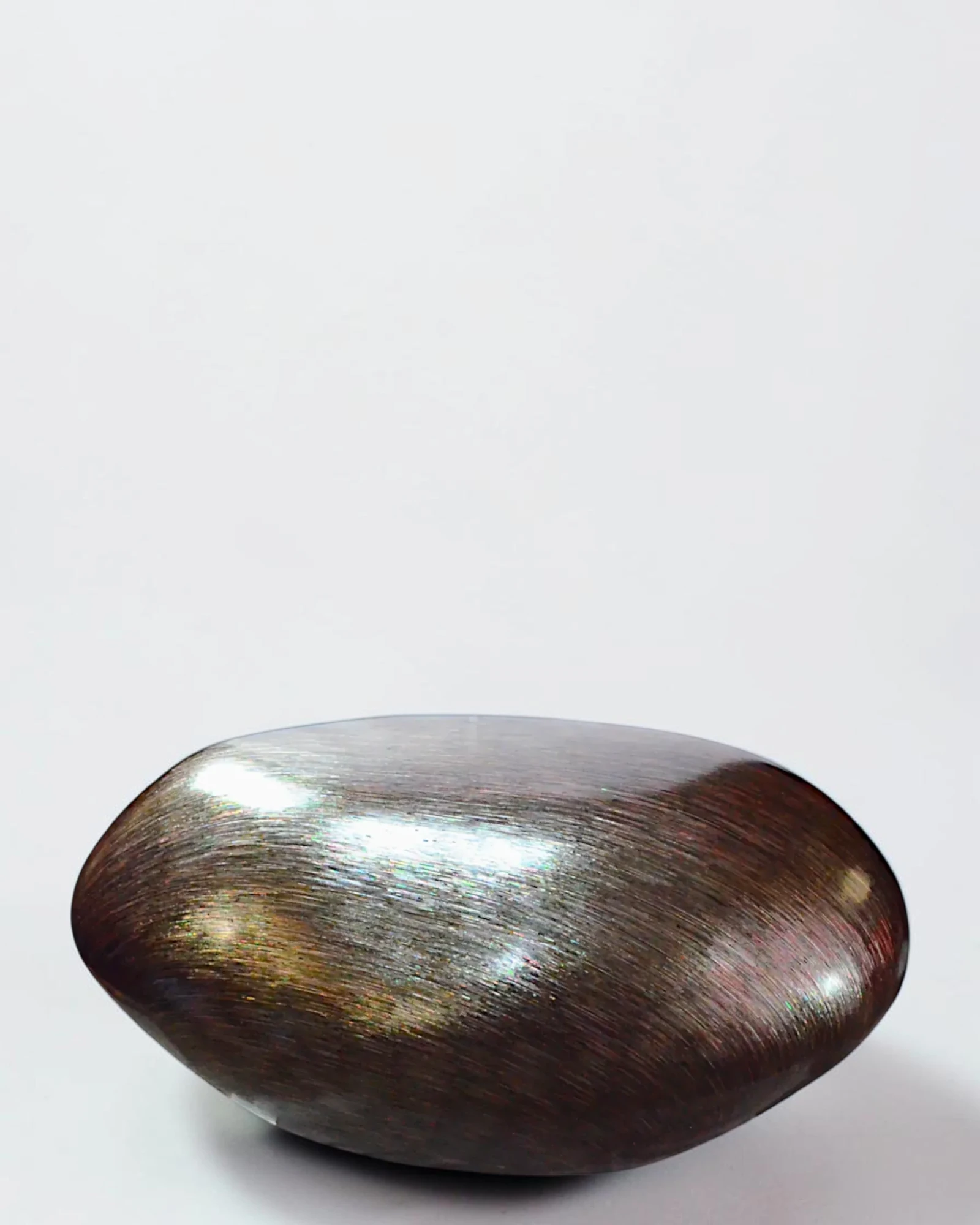
Seongho Kim
No. 4
The darkest of the three, built up until the base tone reads near-black with garnet passing beneath the surface at certain angles. Where No. 1 withholds color, No. 4 concentrates it, the same closed form, worked to its furthest tonal point.
View work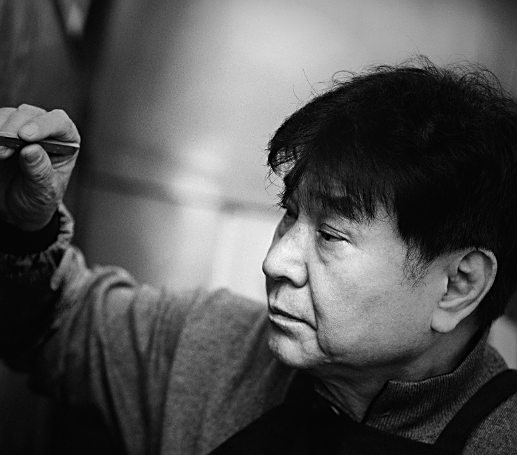

Hwankyeong Kim
No. 1
A black lacquer box worked in dense repeat: chrysanthemum heads in red, violet, and pewter cover the case in a continuous field, broken only by an inlaid octagonal clasp. The pattern reads as field rather than illustration, no single motif is asked to carry the surface alone.
View work
Hwankyeong Kim
No. 2
An archaic script, closer to seal-form characters than to decorative pattern, repeats across a green ground in gold and vermilion, arranged as a field rather than a text meant to be read in sequence. A study in pattern-as-structure: the characters carry weight through repetition, not meaning through translation.
View work
Hwankyeong Kim
No. 3
The same archaic-script field as No. 2, restated on a vermilion-orange ground with the character strokes shifted to blue and olive. Read alongside No. 2, the pair functions as a controlled study in how ground color alone changes the temperature of an identical pattern.
View work
Hwankyeong Kim
No. 4
Kim's one unornamented piece in this group: a low lacquer table built on joinery alone, the black surface left to carry the work rather than any applied pattern. Set beside the boxes, it argues that restraint and density are two settings of the same practice, not opposing ones.
View work
Hwankyeong Kim
No. 5
A quieter register than No. 1: a floral vine pattern rendered in soft, desaturated color against a near-black ground, the individual blossoms smaller and more widely spaced. Closes this sequence on its most legible, least dense composition.
View work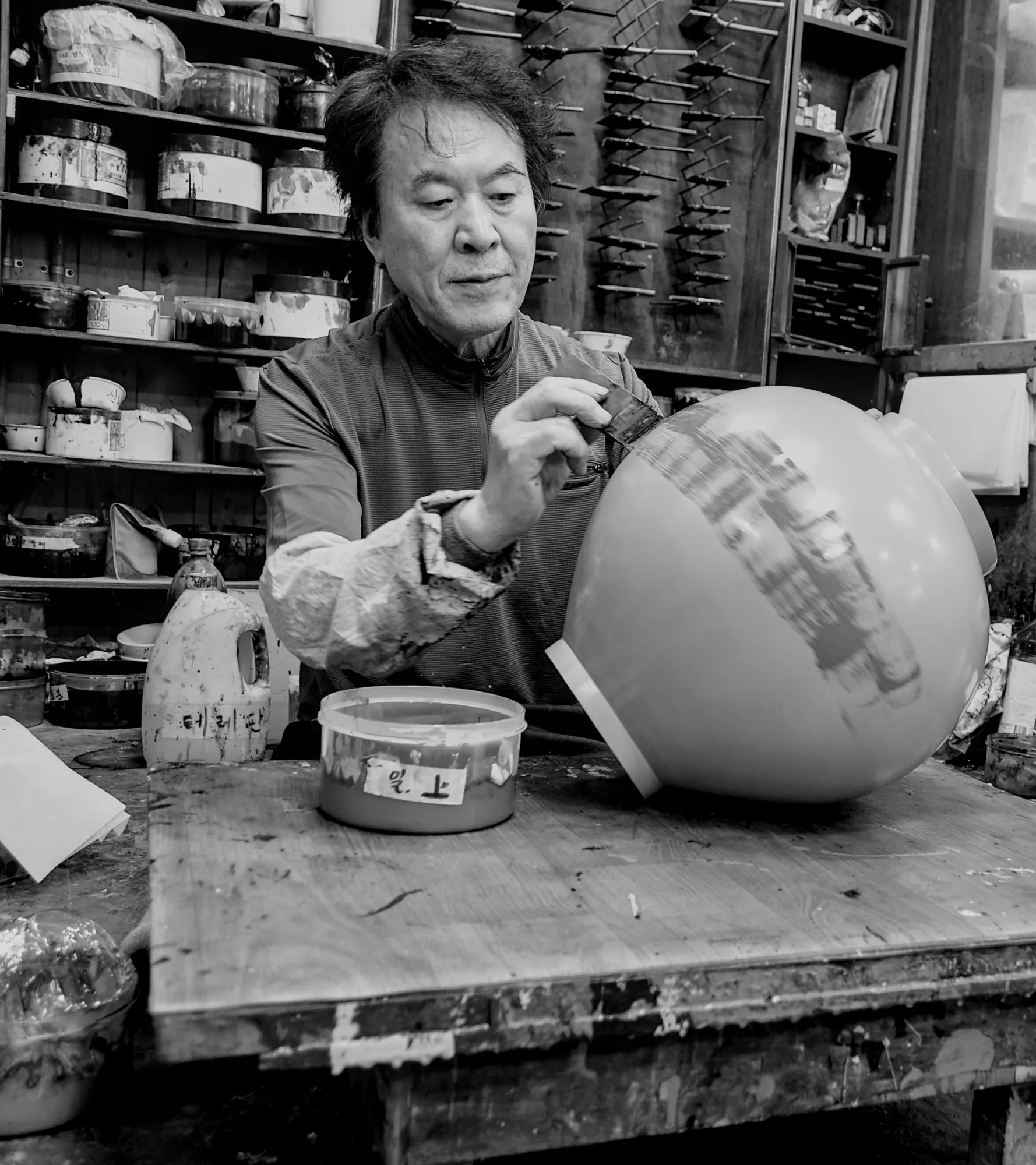

Daehyeon Son
No. 1
A closed, rounded form finished in a pearlescent white ground, the surface combed in broad sweeping strokes that catch light unevenly across the curve. The silhouette recalls the moon jar without repeating it in porcelain, the reference is held at a distance, not restaged.
View work
Daehyeon Son
No. 2
Paired with No. 1 in form and finish: the same pearlescent, combed surface and closed silhouette, worked as a companion piece rather than a variation. Presented together, the two argue for repetition as a deliberate register, not a limitation of range.
View work
Daehyeon Son
No. 3
A sharp departure from the moon-jar pair: an hourglass-profile vase built up in black lacquer and covered edge to edge in shell inlay, the floral scrollwork dense enough to read as texture before it reads as image. Places Son's practice across two registers, restraint and accumulation, within a single body of work.
View work
Daehyeon Son
No. 4
A bottle form in green lacquer, the body worked in the same shell-inlay technique as No. 3 but set against color rather than black, with a fret-patterned band marking the transition into the neck. Continues the register opened by No. 3 rather than returning to the pearlescent forms.
View work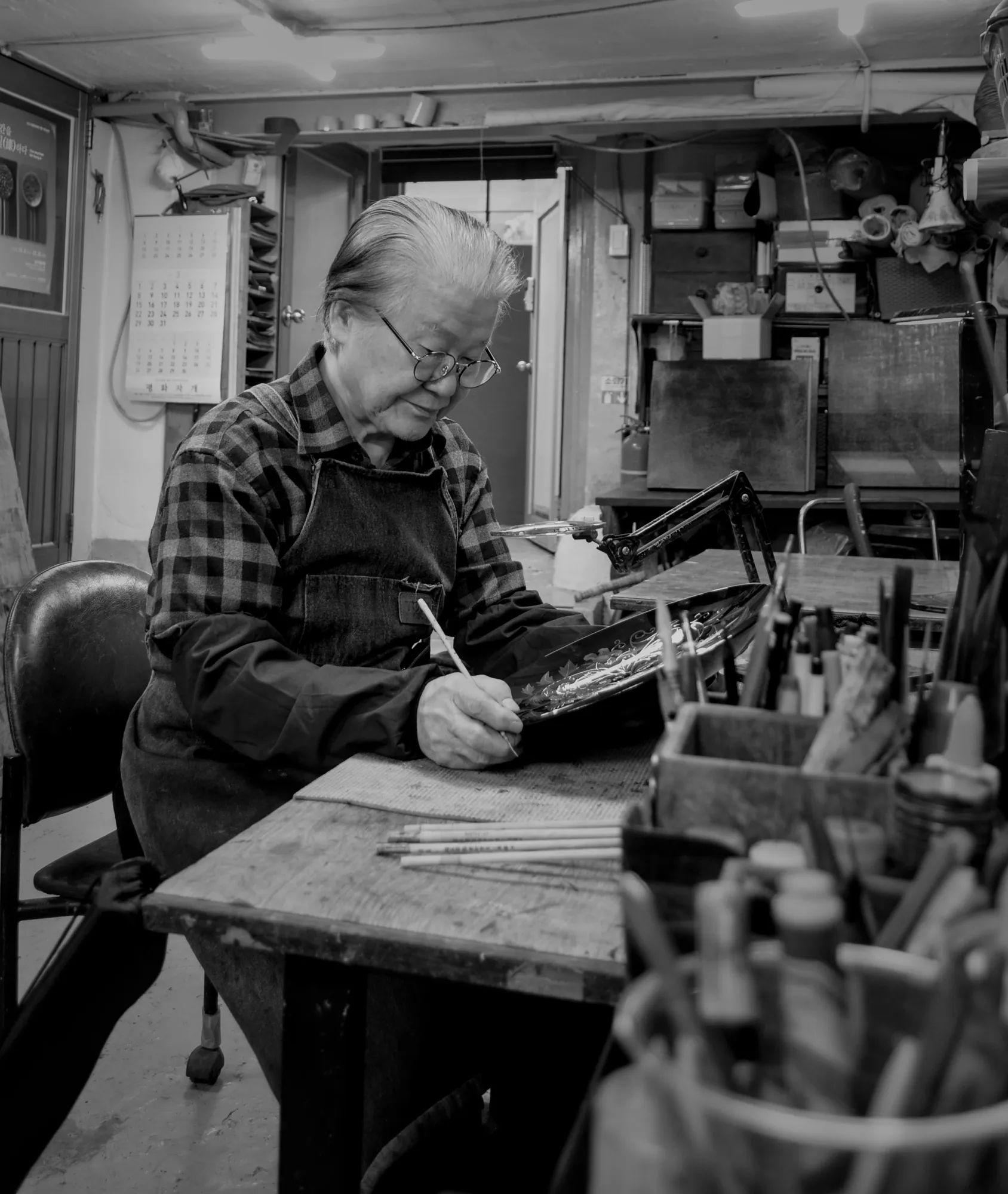

Jongkwan Choi
No. 1
An octagonal-topped table in dark wood, the surface inlaid with a willow-leaf motif in gold and shell against black lacquer, set on shaped legs left otherwise plain. Furniture built to carry a single inlaid image rather than a repeating field, closer to Choi's box work than to Kim's unornamented table.
View work
Jongkwan Choi
No. 2
A black lacquer box worked in a tight, all-over repeat of plum-blossom heads in gold, each flower rendered identically and placed without hierarchy across the surface. The density sits between Hwankyeong Kim's script fields and Son's inlaid florals, closer to pattern than to picture.
View work
Jongkwan Choi
No. 3
The most graphic of Choi's boxes: cranes rendered in flat gold alongside abstracted calligraphic line-work, with a second layer of cranes picked out in fractured shell inlay for contrast in material rather than color. Scaled and composed as a single image rather than a repeating field, the box reads as picture before it reads as object.
View work